
Regular readers of my commentaries here on the CEP website know that I generally frown upon the Lectionary’s tendency to delete certain portions of passages. Usually the stuff the RCL skips over pertains to judgment and the like but since we cannot get a fully rounded picture of God’s views toward sin and evil without encountering judgment passages, skipping over them feels wrong. God’s grace unto salvation shines the more brightly when we see the judgment we actually deserve.
In the case of Psalm 68, however, I am perhaps a bit more favorably inclined to the Lectionary’s skipping over the long midsection of this song. Because at least one of the verses deals with wading through pools of the blood of enemies and also refers to how the dogs would have their fill in lapping up such blood. Yuck. But also, the graphic nature of that imagery comes a little too close to glorying in death and even if that is not quite how the psalmist intended those lines to be read, enough people might do so anyway that caution is called for and maybe it is safer just to leave those sentiments to one side for the moment.
Still, from the opening verse onward there is no denying that this psalm is about the fact that God does have cosmic opponents who are against God and God’s holiness and God’s designs for this creation. What’s more, God has to deal with those enemies and if they cannot be brought to a better God-fearing perspective on life, then such enemies do need to be scattered and sent away so that the cause of righteousness can prevail. Perhaps it is no one’s favorite topic to ponder but neither can it be written out of the wider biblical picture.
Even so, what Psalm 68 is mostly about is a celebration of the sheer majesty and power of God and while these things are a source of joy and singing for the people of God, they are at the same time a signal to the wicked that if they think they can prevail in the long run against the God of Israel, they are decidedly wrong about that. In the end you either join in the praise chorus that the concluding verses of Psalm 68 invite all nations and all people to join or you will find yourself on the receiving end of God’s judgment that sin and evil are wrong.
But early in Psalm 68 we get also some really tender imagery about God’s care for widows and lonely people and orphans and the prisoners. Once again this invokes the “anawim” that occurs like a refrain all through the Old Testament. God is said again and again to care for those who exist on the margins of society, those who are the most vulnerable to abuse and exploitation. But what if in addition to being the tender portion of Psalm 68 we see this as also directly connected to those who count in this song as God’s enemies?
That is, what if among other things these foes of God are the ones who abuse and neglect widows and orphans? What if these opponents of God include in their activities the imprisonment of the innocent even as they backhand and ignore the lonely of this world? What if, in other words, these people count as enemies that need to be scattered and judged precisely because they do things to innocent and vulnerable and lonely people that we likely can all agree is downright atrocious behavior? Might this make us a bit more favorably inclined toward Psalm 68’s darker words of battle and judgment? Or at least we can better understand such a verdict on these people?
It’s one thing to deal with judgement of God’s foes in the abstract. It’s quite another thing to look at actual crimes against the innocent and sense our own disdain over such terrible actions. We may not be dealing with people who just are not very religious but who otherwise lead decent lives as our neighbors, coworkers, and friends. These may not be first of all people who adhere to a different faith tradition than our own much less people from other parts of the Christian tradition whose doctrines or church rules differ from our own denomination. Yes, God will need to deal with all of us and that includes people who do not accept Jesus as the Son of God and Messiah.
But our views on words of judgment such as we find in places like Psalm 68 may change a bit when we consider that we may be talking about those who both have the power to make life miserable for vulnerable and marginalized people and who do indeed use that power to prop up and enrich themselves at the expense of the actual lives of the poor and needy. Even so we ought not revel in the thought of the judgment and punishment of even those nasty folks. We always pray for grace to prevail, for hearts to be turned and thus our appropriate recoiling a bit over even those lines in Psalm 68 that seem to celebrate with undue fervor bloodshed. If we cannot nuance such sentiments with Jesus’s words as the Prince of Peace who told us to love and forgive even our fiercest foes, then we are not interpreting Scripture correctly.
When Psalm 68 concludes with the call, “Sing to God, you kingdoms of the earth,” we have to sing that part of this song and mean it with all our heart. We do not in the end want to see only the judgment of God but rather the salvation of all peoples including those who for now are on a collision course with God’s wrath on account of their mistreatment of people made in the very image of God. For that reason, although we do need along with the psalmist to cry out for justice for those who oppress the innocent, we want to be crying out with much louder voices the call for all to come to repentance and thus to sing praise to the Lord.
Illustration Idea
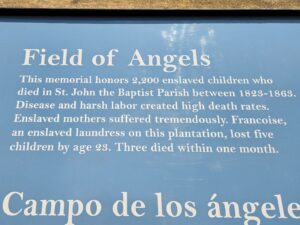
In May of 2024 I took part in an 8-day travel course that went throughout the American South to remember and learn more about the legacy of the slave culture in the United States. Our first stop was the Whitney Plantation outside of New Orleans. Unlike some plantations that are preserved to celebrate the Old South, Whitney has been preserved as a memorial to the victims of slavery. But no part of the Whitney memorial was more emotionally difficult for me and the rest of my group as the section dedicated to the children who had suffered under slavery and who died at Whitney. The cruelty of human enslavement as once happened in America hits home with peculiar punch and sorrow when we consider the innocent little ones who perished. When the Old Testament tells us—as it repeatedly does—of God’s care for the innocent and certainly for children, little ones like the ones memorialized at Whitney are precisely who we are to think about.
Dive Deeper
This Week:

Spark Inspiration:


Sign Up for Our Newsletter!
Insights on preaching and sermon ideas, straight to your inbox. Delivered Weekly!
Sermon Commentary for Sunday, May 17, 2026
Psalm 68:1-10, 32-35 Commentary