
Probably we don’t know enough about angels to know exactly what it means for the psalmist to suggest that we human being have been made “a little lower” than the angels. We have the sense in Scripture that angels are powerful in their own way. They do the will of God. They are messengers for God. They pop in to make the big announcements like the birth of John the Baptist, Mary’s miraculous conception of the Son of God, and the birth of Jesus. They can make a joyful and music-filled appearance in the sky, soaring above some quivering shepherds below. There are hints elsewhere in Scripture that angels may be the ones to pour out God’s judgment.
Apparently, then, we are a little lower than most of that. Both angels and humans are creations of God. We are creatures. We share that much in common. We don’t know what kind of body an angel has. If we pushed our finger into the arm of Gabriel, would we meet resistance similar to when we push on another person’s skin or would our finer pass right through what would be more like a gossamer being? Do angels need to eat or drink? Do they sleep? Probably not but we don’t know that either.
Whatever angels are, we’re just a rung or so below them Psalm 8 reveals. We are made in the Image of God and so if angels are in any way reminiscent of their Creator God, so are we. Chips off the old block as they say. And because of this God-granted dignity, we can represent God in this creation. We are in charge of all creatures and birds and lands. We are at once dwarfed by the immensity of creation (and the psalmist did not know the half of it in terms of what all those starry hosts mean for the scale of the cosmos) while at the same time we have been elevated in status over that same creation.
As has been noted often before here in CEP commentaries—especially the ones on the Book of Psalms—as gob smacked as Israel was over the immense glory of their God Yahweh, what amazed the ancient poets even more was that A) This immense God stoops down to take loving note of each one of us tiny though we are and B) He even dignifies us with his own Image and all the stewardly care of this creation that the Image of God entails.
Psalm 8 is a celebration of that favored divine status for humanity. Naturally these days a lot of people are not buying into that idea. If seeing the stunning images of the James Webb telescope increases our awe over God’s creative splendor as believers in God, those same images and the vastness of outer space that we now know about is more than enough to make non-believers conclude, “We humans cannot possibly matter that much!” Gone are the days of thinking man is the measure of all things or that the cosmos revolves around humanity as it resides on a modest-sized planet orbiting a fairly typical star in a galaxy containing a billion more stars and in a universe containing another billion or so whole galaxies extending to the fringes of the known universe.
It’s a curiosity of the human race that different people can stare up into the same night sky and draw radically different conclusions. The psalmist concluded that Israel’s God was great because despite the immensity of the universe, God singles us out for love and care. Others look up and draw the conclusion that we’re nothing special and we’re fooling ourselves to convince ourselves otherwise.
But Psalm 8 knows enough not to run too far ahead with the special status of human beings. The entire poem is framed by the phrase, “Yahweh, our Lord, how majestic is your name over all the earth.” The final glory belongs ever and only to God, not to us. God sees us in our littleness, God loves and cares for us despite how relatively tiny a space we occupy in the universe. But God alone is God and we are not. Although humans deserve respect for the glory and honor with which we have been crowned, it is God who receives due praise and worship and adoration and not we ourselves.
The Year A Lectionary does not assign a Psalm in the Psalm category for Trinity Sunday so Psalm 8 is the second reading option under “First Reading.” There is no obvious Trinitarian application of Psalm 8 so far as I can see. However, when Psalm 8 gets evoked in Hebrews 2, the connection to the “Son of man” is made to Jesus as well as the idea that God the Father has now placed all things under Jesus’s feet. Be warned, however: most translations in an attempt to use more gender inclusive changed the “Son of man” to mortals and all the he, him, and his pronouns to they, them, and their. That works OK for Psalm 8 proper but not for Hebrews 2 where we need to see the singular connection to Jesus as the final Son of Man. But using the plural in Hebrews 2 for the key pronouns completely obscures that connection to Christ Jesus.
But if Psalm 8 celebrates the Image of God in humanity, then we are right to connect this to Jesus Christ who in the New Testament is presented as the express Image of God par excellence. This is a point made also in Hebrews in chapter 1: “The Son is the radiance of God’s glory and the exact representation of his being, sustaining all things by his powerful word.” He is now the ascended and risen Lord who has again elevated us to salvation by his grace alone. And so now all praise and glory be to God the Father, God the Son, and God the Holy Spirit—the God whose Name is majestic over all the earth and beyond.
Illustration Idea
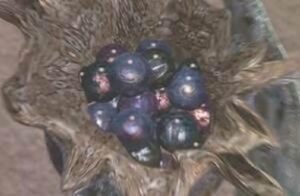
The film Men in Black has a little fun with the idea of how small our world finally is in the closing sequence of the film that you can view here. In the segment the camera pulls rapidly back from an aerial view of New York City to then reveal the whole planet and then the whole solar system and then the whole Milky Way galaxy only to have it turn out that all of this exists inside a kind if big marble with which some vast and superior alien species is playing a game before depositing the marble of our universe into a bag with a whole bunch of other universe marbles. It’s humorous and meant to be a bit of satire perhaps too but the message is clear: for all our human pretentions on planet Earth, we may just be super insignificant in the grand scheme of things after all.
Psalm 8 says otherwise but it is by faith alone we can see that.

 Audio Sermons Related To
  Written Sermons Related To


Sermon Commentary for Sunday, May 31, 2026
Psalm 8 Commentary